
Gyeongbokgung Palace
Korean name: 경복궁
Seoul
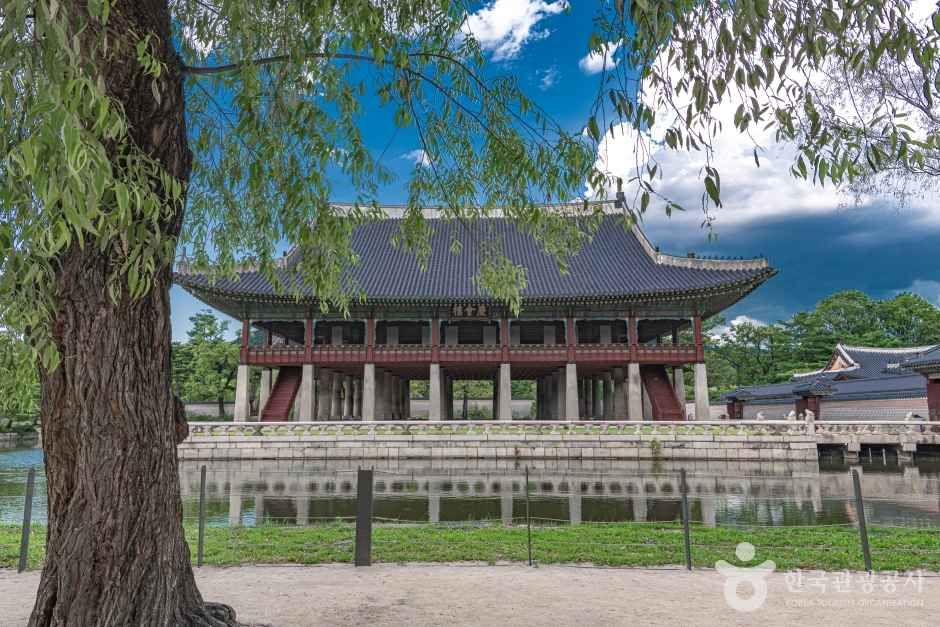
Gyeongbokgung Palace, built in 1395, was the main royal palace of the Joseon Dynasty in Seoul. Visitors can stroll past traditional buildings such as Geunjeongjeon Hall, Gyeonghoeru Pavilion and Hyangwonjeong Pavilion.
About
Gyeongbokgung Palace was built in 1395 as the official palace of the Joseon dynasty by Yi Seong-gye, the future King Taejo and founder of the new regime.
Gyeongbokgung Palace is commonly referred to as the Northern Palace because of its location to the north, comparied to Changdeokgung Palace in the east and Gyeonghuigung Palace in the west. Gyeongbokgung Palace is arguably the most beautiful and is the largest of all five palaces. Many Joseon kings were crowned here.
The premises were once destroyed by fire during the Imjin War (1592-1598). However, all of the palace buildings were later restored under the leadership of Heungseondaewongun during the reign of King Gojong.
Key details
- Address
- 161 Sajik-ro, Jongno-gu, Seoul
- Opening hours
- January–February and November–December: 09:00–17:00 (last entry 16:00); March–May and September–October: 09:00–18:00 (last entry 17:00); June–August: 09:00–18:30 (last entry 17:30)
- Closed
- Every Tuesday. However, if the regular closing day falls on a public holiday or substitute holiday, the palace is open, and the next first non-holiday day becomes the regular closing day.
- Contact
- 02-3700-3900
- Region
- Seoul
Operating details can change. Please check the official information again before you go.
Open in a map
Nearby places
Festivals & events in Seoul
Source: Korea Tourism Organization (TourAPI)
The photo and description on this page are based on Korea Tourism Organization material published under KOGL Type 1 (attribution).