
Ganghwa Hyanggyo (Ganghwa Confucian School)
Korean name: 강화향교
Incheon
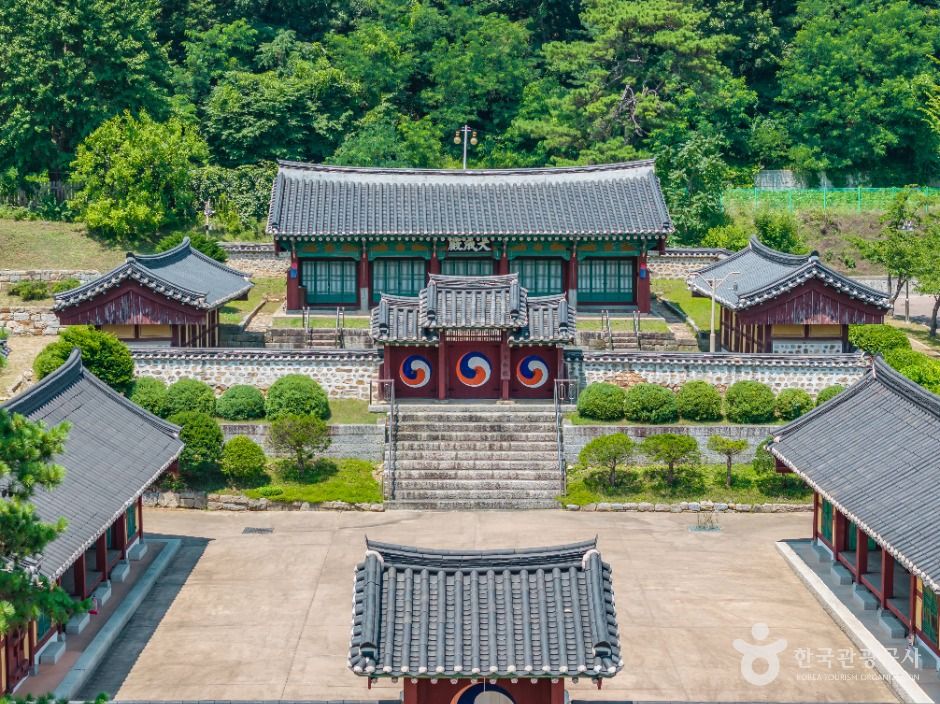
Ganghwa Hyanggyo is a tangible cultural heritage site of Incheon, built as a local school for education and moral teaching. Visitors can see its buildings, such as Daeseongjeon and Myeongnyundang.
About
Ganghwa Hyanggyo, a tangible cultural heritage of Incheon, was an educational institution for local schooling and the moral teaching of local people. It was founded in 1127 in Gocheon-ri, Naega-myeon, during the Goryeo period. It was later moved to Gapgot-ri in Ganghwa-eup in 1232 and then to Boreumdo in Seodo-myeon.
In 1624 Sim Yeol, then the Ganghwa magistrate, moved it to the foot of Songaksan, and in 1629 Myeongnyundang was built and the school was called Hakgung. It was moved near Namsan in 1673 by magistrate Min Si-jung and to its present site in 1731 by magistrate Yu Cheok-gi.
The complex includes Daeseongjeon, Dongmu, Seomu, Naesammun, Myeongnyundang, Dongjae, Seojae and Oesammun. Myeongnyundang was the lecture hall where students studied. With state support such as land, servants and books, the school handled rites and education, but today only its enshrinement role remains.
Key details
- Address
- 58 Hyanggyo-gil, Ganghwa-eup, Ganghwa-gun, Incheon
- Opening hours
- 09:00~15:00 (For details, please inquire by phone.)
- Closed
- Every Saturday and Sunday (For details, please inquire by phone.)
- Contact
- 032-934-5321
- Region
- Incheon
Operating details can change. Please check the official information again before you go.
Open in a map
Nearby places
Festivals & events in Incheon
- 2026 Culture Day (2026 문화가 있는 날)
- Royal Stroll (왕가의 산책)
- 2026 Incheon International Design Fair (INDEF) (2026 인천국제디자인페어[INDEF])
- Incheon Pentaport Rock Festival
Source: Korea Tourism Organization (TourAPI)
The photo and description on this page are based on Korea Tourism Organization material published under KOGL Type 1 (attribution).