
Jinjuseong Fortress
Korean name: 진주성
Gyeongnam
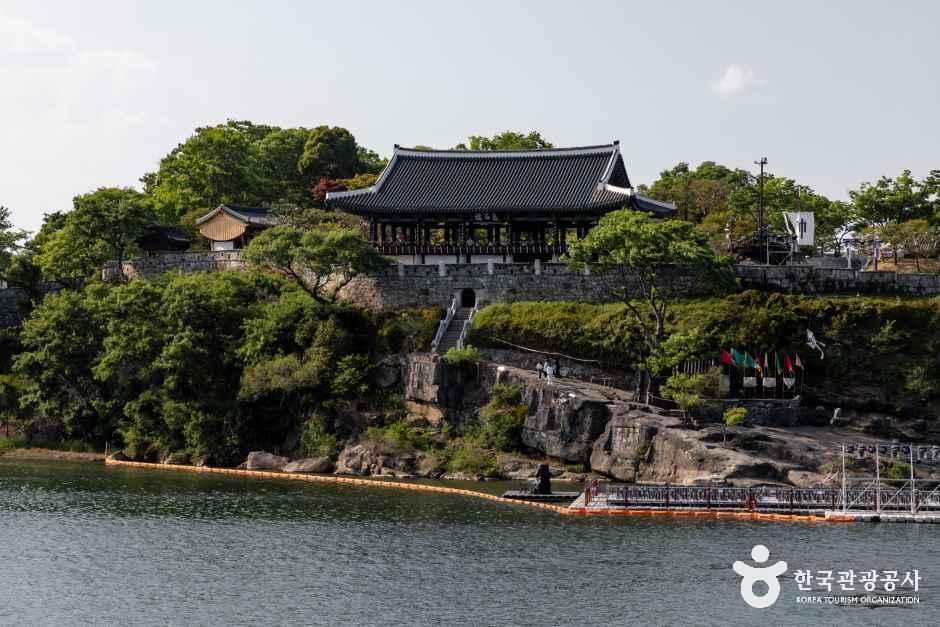
Jinjuseong Fortress was called Geoyeolseong in the Three Kingdoms period and received its current name in the Joseon era. Inside, you can see Chokseongnu Pavilion and the Jinju National Museum.
About
The fortress was known as Geoyeolseong in the Three Kingdoms period and Chokseongseong in the Goryeo period, and it was renamed Jinjuseong in the Joseon era. Its stone wall is about 1,760 m long and about 5 to 8 m high, and the grounds are said to have had 3 wells, 3 springs and a military granary.
According to records, it was rebuilt in stone in 1379 as a defense against Japanese raiders.
During the Imjin War, the first Battle of Jinju in 1592 was fought here by about 3,800 soldiers against nearly 20,000 enemy troops, and in 1593 about 70,000 civilians, officials and soldiers faced about 100,000 enemy troops in an 11-day battle.
It is also remembered as the place where Nongae threw herself into the Namgang River. Inside the fortress are Chokseongnu Pavilion, the Gimsimin Jeonseonggak Monument, Uigisa Shrine, Seojangdae, Bukjangdae, Changyeolsa Shrine, the Jinju National Museum, Hoguksa Temple and an outdoor performance hall.
Key details
- Address
- 626 Namgang-ro, Jinju-si, Gyeongsangnam-do
- Opening hours
- [Summer (March–October)] 05:00–23:00 [Winter (November–February)] 05:00–22:00
- Closed
- Open year-round
- Contact
- 055-749-5171
- Region
- Gyeongnam
Operating details can change. Please check the official information again before you go.
Open in a map
Nearby places

Festivals & events in Gyeongnam
Source: Korea Tourism Organization (TourAPI)
The photo and description on this page are based on Korea Tourism Organization material published under KOGL Type 1 (attribution).